Box Mod Wattage Explained for Better Vaping
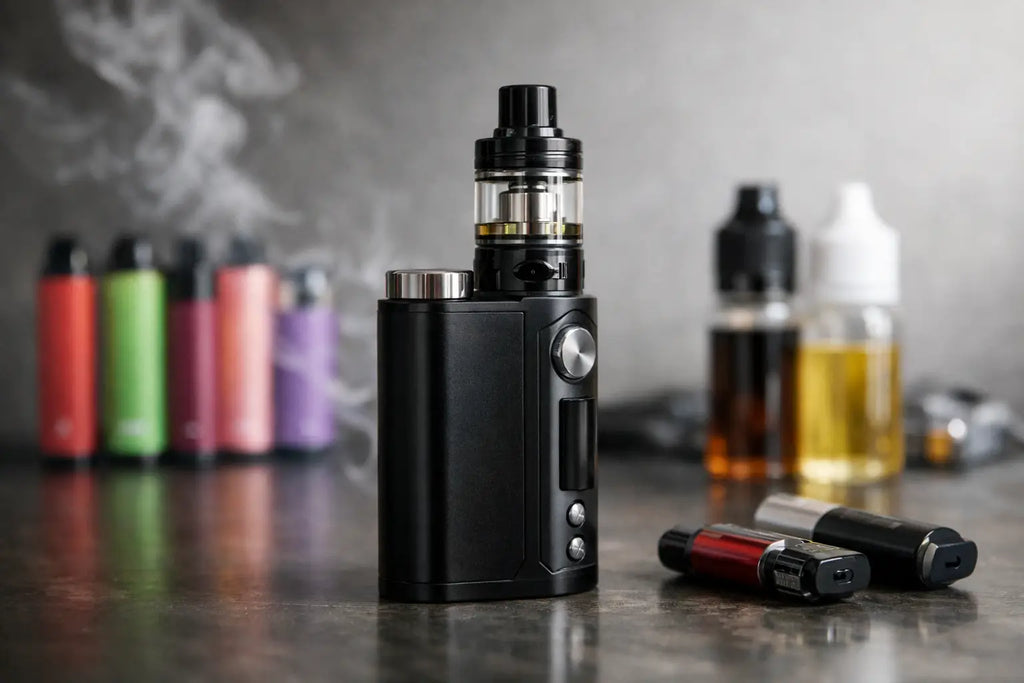
A new box mod can make a familiar tank feel completely different. Set a 0.15-ohm coil to 15W and it will barely wake up; push a small mouth-to-lung coil to 60W and it will quickly taste burnt. Box mod wattage explained properly comes down to matching the power setting to your coil, e-liquid, airflow and preferred vape style - not simply choosing the highest number on the screen.
Regulated box mods give you useful control, but they do not turn every tank into a high-wattage setup. The right setting is usually found within a fairly narrow range. Once you know what the numbers mean, choosing it becomes straightforward.
What wattage changes on a box mod
Wattage is the amount of electrical power your mod sends to the coil. More power heats the coil faster and more intensely. In practical terms, increasing wattage usually produces warmer vapour, greater vapour volume and a stronger sense of flavour - up to the point where the coil and wick can no longer keep up.
At lower wattages, the vape is generally cooler, quieter and more economical with e-liquid and battery charge. This suits mouth-to-lung tanks, tighter airflow, higher-resistance coils and many pod-style setups. Higher wattages are normally used for direct-to-lung vaping with sub-ohm coils, open airflow and thicker e-liquids.
Wattage is not a flavour dial with one universal perfect setting. A sweet dessert liquid, for example, may feel richer a few watts above the coil's minimum recommendation, while a sharp fruit flavour can be cleaner nearer the lower end. Airflow, coil material and the condition of the wick all affect the result.
Wattage, heat and coil life
Running more power creates more heat. That can improve a coil's response and bring out fuller notes in an e-liquid, but it also uses liquid more quickly. If the cotton is not saturated fast enough, it starts to singe. This is why excessive wattage shortens coil life and can create a dry, burnt taste.
The answer is not always to lower wattage dramatically. If a coil tastes weak at its recommended minimum, move up in small steps. If it becomes hot, harsh or starts losing flavour after a few pulls, reduce the setting and check that the coil has been properly primed.
Box mod wattage explained through coil ranges
The wattage range printed on a coil is your best starting point. A coil marked 50-70W has been designed to work within that window, assuming it is used in the matching tank with appropriate airflow and e-liquid. It does not mean you need to vape at 70W, and it does not mean 70W will automatically give the best flavour.
Start near the bottom of the stated range after fitting a new coil. Take a few gentle puffs, then increase by 2-5W at a time until the vapour temperature, flavour and draw feel right. Give the coil a moment between changes. Large jumps make it harder to tell whether the result is genuinely better or simply hotter.
A coil's resistance, measured in ohms, gives a useful clue but is not the full story. Lower-resistance coils often use more power, while higher-resistance coils commonly need less. However, coil design matters just as much. A 0.3-ohm mesh coil and a 0.3-ohm round-wire coil can have very different recommended wattage ranges.
Do not rely on resistance alone when buying replacement coils. Check the exact coil family for your tank, the stated wattage range and whether it is intended for mouth-to-lung, restricted direct-to-lung or direct-to-lung vaping.
Match wattage to your e-liquid and airflow
Your liquid needs to wick fast enough for the power you are using. High-wattage sub-ohm tanks are usually paired with thicker, higher-VG shortfills, while lower-power tanks and pods often work better with 50/50 e-liquid or nicotine salts. A thin liquid in a large sub-ohm coil may flood, while a thick liquid in a small pod coil may struggle to reach the cotton.
Nicotine strength matters too. More vapour means more nicotine delivered per puff, so high-power direct-to-lung vaping is normally paired with low-strength e-liquid, often 3mg or 6mg. Stronger nicotine salts and 50/50 liquids are more commonly used at lower wattages in pod kits or mouth-to-lung tanks. If your vape feels overly harsh or makes you want to put it down after one puff, reduce the nicotine strength or reduce the power rather than trying to push through it.
Airflow changes the usable wattage range. Open airflow cools the coil and supports higher power. A restricted airflow setting holds heat around the coil, so the same wattage can feel noticeably warmer and harsher. If you prefer a tighter draw, you will often get a better result by lowering the wattage slightly.
You do not need to calculate Ohm's law every time
On a regulated box mod, the device measures coil resistance and adjusts the voltage needed to reach your chosen wattage. That is the benefit of wattage mode: you choose the power, and the mod handles the calculation within its operating limits.
Ohm's law is still useful background knowledge, especially for experienced users building their own coils, but it should not replace the coil manufacturer's guidance. The mod can only regulate safely when the battery, coil and device are compatible. Mechanical mods are a separate category and require a much deeper understanding of battery safety and resistance than a regulated wattage device.
Temperature control is also different from ordinary wattage mode. It uses compatible wire types and a set temperature limit rather than relying only on a fixed wattage setting. If you are unsure whether your coil supports it, use standard wattage mode and follow the coil guidance.
Signs your wattage needs adjusting
A weak vape does not always mean the wattage is too low. Check that the tank has enough liquid, the coil is new enough and the airflow is set as you like it. If all three are fine, add a few watts and test again.
A hot, scratchy vape can mean the wattage is too high, but it may also point to nicotine strength that is too high for the amount of vapour produced. Reduce one variable at a time. Lower the wattage first, then reassess your airflow and e-liquid choice.
Gurgling, spitting or leaking are usually wicking and airflow issues rather than a reason to increase power. Make sure the coil is seated correctly and avoid overfilling the tank. Conversely, a dry or burnt taste means stop vaping on that coil straight away. Let it sit if the wick may simply be drying out; if the burnt flavour remains, replace the coil.
Battery use and safe box mod habits
Higher wattage drains batteries faster. A dual-18650 box mod has more headroom than a compact single-battery mod, but both will need charging more often when used at higher power. This is normal, not a fault with the device.
For removable-battery mods, treat the batteries as part of the setup rather than an afterthought:
- Use suitable, authentic high-drain cells from a reputable battery supplier.
- Keep paired batteries together in the same device and charge them together.
- Check wraps and insulating rings regularly, replacing any damaged cell wrap before use.
- Carry spare batteries in a proper protective case, never loose in a pocket or bag.
A sensible first setup for a new coil
Fit the coil, fill the tank and allow the cotton to saturate before firing it. Starting too soon is one of the easiest ways to ruin a fresh coil. For most tanks, five to ten minutes is sensible, especially with thicker liquid.
Set the mod at the bottom of the coil's recommended wattage range. Take a few short puffs, then raise power gradually until the vape feels balanced. Keep an eye on liquid level during the first tankful, because a new coil at higher power can use more e-liquid than expected.
There is no prize for vaping at the maximum setting. The best wattage is the lowest point that gives you the flavour, warmth and vapour you actually want without making the coil struggle. Once you find it, note the setting and enjoy a more consistent vape every time you refill.